Double Points Events: Run a 2x Points Promotion Without Blowing Your Margin
Run the double-points break-even test, cap issuance, exclude returns, and measure event-plus-follow-up lift against a seasonal baseline or randomized holdout.
The short version: A double points event is a margin decision first and a marketing decision second. Run a break-even test on your own margin, earn rate and redemption rate, cap the multiplier, and exclude returns before you announce anything.
Key takeaways
- Points issued this weekend create exposure now and draw cash when they are redeemed, often weeks or months later. Budget both, and ask your accountant when the cost is recognized.
- Per-order caps limit one oversized basket; per-member caps limit one account spreading spend across many orders. Neither stops one person opening several accounts. Pick both limits from your own order-size distribution.
- Run the break-even test before launch: bonus points are paid on orders that would have happened anyway, so the event needs a stated lift to pay. If contribution margin is at or below base plus bonus earn times redemption, no lift during the event saves it.
- Hold bonus points until delivery plus your full return window, with no return open, or returns will mint points on money you gave back.
- Baseline alone can't separate pull-forward from lift — hold out a comparison cohort or don't claim lift.
A Double Points Event Can Promise the Same Face Value as a Discount
Say you rejected a 10% discount as too expensive. A 2x points event on the same order can carry the same face value, and it feels free because no price changes at checkout. Work it through: a $100 order at a 5% base earn rate returns 500 points, worth $5 at $0.01 per point. Double it and you've issued 1,000 points — $10 back, the same $10 the discount would have cost.
Timing is one difference, but equal face value does not mean equal expected cost: under the later 85% redemption assumption and conservative dollar-for-dollar costing, the $10 points promise has an expected total redemption cost of $10 × 85%, while the immediate discount costs $10. On an otherwise unchanged order, the event’s incremental cost above the ordinary base is only the $5 bonus × 85%; incremental orders have separate economics in the break-even test below. The discount costs margin once, on that order, and it's over. The points are a promise your balance sheet keeps later, when the member redeems — possibly against a purchase that was happening anyway. The classic failure: comparing face values, concluding the two promos are identical, and picking the one that merely delays its cost.
Cap the Multiplier: Per-Order and Per-Member Limits
Two caps, two different problems. A per-order cap applies the multiplier only to the first slice of each order — say the first $180. It blocks bulk buyers who place one enormous order and harvest bonus points on stock they'd buy at full earn rate anyway. A per-member cap limits total bonus points per account across the whole event — size it from the same distribution: take your top decile's expected event earnings, or a multiple of your expected event-week order value, and cap above the honest buyer but below the harvester (illustrative — calibrate to your own data). Neither cap stops one person opening several accounts; for that, flag accounts that share a payment card or delivery address and have a person review them rather than merging them automatically.
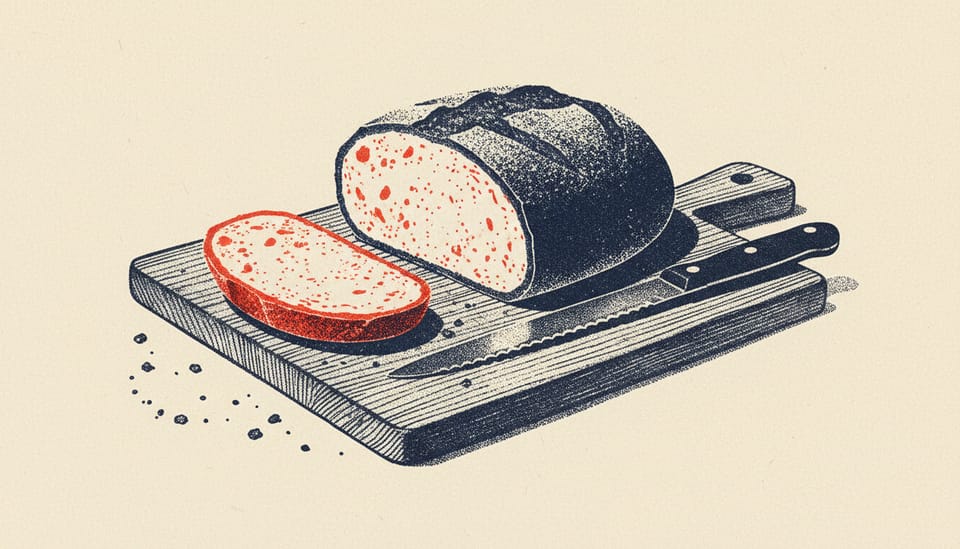
Don't guess the per-order cap either; read it off your order-size distribution. If your 90th-percentile order value is $180, capping the multiplier there (illustrative — pull your own percentile) leaves ordinary orders untouched while trimming the tail. The arithmetic: a $400 order with a $180 cap at 2x earns double points on $180 and base points on the remaining $220 — 2,900 total points instead of 4,000, a saving of 1,100.
Run the Double Points Break-Even Test Before Launch
A double points break-even test is a pre-launch calculation that asks how much extra member revenue the event must create to pay for its bonus points. The cost and the gain fall on different orders. On orders that would have happened anyway, the event pays the bonus points and gains nothing. On incremental orders during the event, it earns contribution margin but pays base plus bonus points. After the event, orders earn base points only, so extra orders then, or the dip if the event pulled orders forward, count at that lower points cost.
Take four inputs from your own data: contribution margin at the event's selling price (CM), base earn rate as a share of revenue (e), bonus earn rate (b, equal to e for 2x), and expected redemption rate (r, 100% if you have never measured it). Treat each $1 of redeemed points as $1 of cost, which is conservative. Then:
event profit = incremental event revenue × (CM − (e + b) × r) − baseline event revenue × b × r + follow-up revenue change × (CM − e × r) − fixed event costs
The follow-up revenue change is the members' spend in the weeks after the event minus what they would have spent anyway; it is negative if the event pulled orders forward. Approve on the event period with the follow-up change at zero, then check afterwards that it was not negative. Setting profit to zero gives break-even lift = b × r / (CM − (e + b) × r) on event revenue, before fixed costs such as email sends. Baseline event revenue is what the same members would have spent in the event window without the event: last year's same period for the same members, or a holdout's spend, not a trailing average when the event sits on a seasonal peak. The hard stop: if CM ≤ (e + b) × r, every incremental event order loses money and no amount of event lift saves it. Only a later gain in follow-up orders could, and you cannot know that before launch, so treat the hard stop as a rejection.
Work it on a 30% contribution margin, a 5% base doubled to 10%, and 85% redemption (illustrative; use yours). Break-even lift = 0.05 × 0.85 / (0.30 − 0.10 × 0.85) = 0.0425 / 0.215 = 19.8%; at 100% redemption it is 0.05 / 0.20 = 25%. On an illustrative $30,000 of baseline member revenue, the event has to add about $5,930 of event revenue just to cover the $1,275 of bonus points paid on the baseline, and more if the weeks after dip. A tempting shortcut compares contribution margin × redemption rate against face value × redemption rate; the redemption rate sits on both sides and cancels, so the test only asks whether face value is below margin, and it approves events that give away nearly all of it.

Now see where it breaks. Thin margin, generous base: 15% contribution margin, a 10%-back base doubled to 20% face value, 90% redemption. CM − (e + b) × r = 0.15 − 0.20 × 0.90 = −3%, so the hard stop fires: each incremental event order costs more in points than it contributes, and the event is rejected before you have paid for email sends. If the event doesn't fit, shrink the multiplier or the base, not the measurement.
Stacking breaks it faster. A 2x event on top of a 20% sitewide sale, on a product with 30% contribution at full price, leaves (80 − 70) / 80 = 12.5% contribution at the sale price (illustrative inputs). With 5% base and 5% bonus earned on the discounted subtotal at 85% redemption, break-even lift = 0.0425 / (0.125 − 0.085) = 106%; at 100% redemption it is 200%. Two promotions approved separately can each look affordable and fail together, so run the test on the stacked price. Versions that pass more easily: 2x on full-price items only, 2x for a top tier only, a 1.5x multiplier, or bonus points instead of the sitewide discount.
Eligibility Rules That Exclude Returns
If bonus points post at checkout — earn-on-capture — a member can buy during the event, return after it ends, and keep points minted on money you refunded. Record event points as pending at shipment (earn-on-ship), and release them only after confirmed delivery plus your full return window, with no return, refund or dispute open, so a refund claws back the bonus points along with the base ones. This article assumes the clawback mechanics; point holds and return clawbacks cover how to configure the window without punishing honest buyers.
Pull-Forward or Incremental? Measure the Lift Honestly
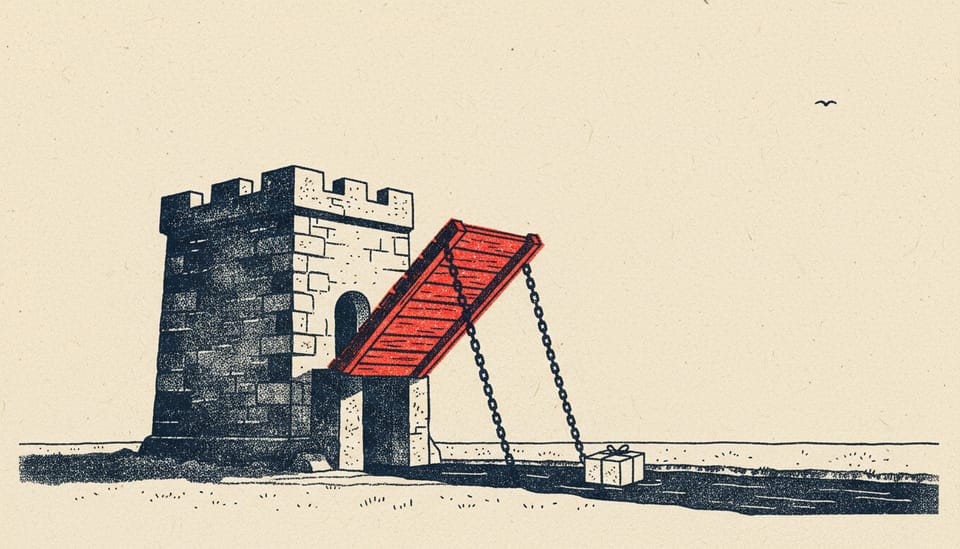
The classic failure: a member who would have ordered this week anyway orders during the event, earns double points, and you book the whole order as event lift. That's pull-forward plus cannibalization of your own margin — spend you bought at a premium you didn't need to pay.

Be upfront about what a baseline can do. A trailing average can describe a spike and dip in a nonseasonal period, but it cannot establish incrementality. Measure event week plus a follow-up window long enough to cover your buying cycle (illustratively 2–4 weeks), using the same seasonal counterfactual as the approval test. Prefer random allocation of comparable eligible members to promo and holdout groups, and compare contribution after points cost for the event and the follow-up period separately (base plus bonus points during the event, base points after it), so timing shifts count against the result. Before launch, size the split using your baseline revenue variation and the break-even lift: the minimum detectable lift must be no larger than the lift you need to cover costs. If volume cannot support that comparison, extend the observation where appropriate and call the result directional, not proof that the event paid back.
The Liability Spike After the Event
Every point issued is an obligation the business carries until it is redeemed or expires; whether and when it is booked as a liability depends on your program terms and your accountant, but the exposure exists either way, and redemption trails the event by weeks or months. Size the balance before the promo, not when finance asks: expected bonus points × point value × expected redemption rate — point value is what one point redeems for, e.g. $0.01 if 100 points = $1. In the $30,000 example, the break-even event brings about $35,930 of member revenue, and a 5% bonus on it is about 179,650 bonus points; at $0.01 each and an 85% redemption assumption, that adds roughly $1,527 of future obligation for one weekend. Write down the maximum bonus issuance your break-even test approved and check actual issuance against it every day of the event. For the full budgeting treatment — cash versus liability, and how the two diverge — see the Loyalty Program Costs budget. Expiration rules are the opposite lever: they burn the balance down on a schedule, as the points expiration guide covers.

Frequently asked questions
Which cap should I run if I can only set one?
Per-member, if your risk is one account splitting spend across many orders; per-order, if it's single large baskets. Check your own data: if your top decile of bonus-point earnings comes from many small orders, go per-member; from few large ones, go per-order.
What redemption rate should I assume in the break-even test?
Your own program's, measured from issued-to-redeemed history — not a breakage benchmark. If you've never measured it, run the break-even test at 100% redemption as the worst case, then relax it once you have real numbers.
Can I run the multiplier for top tiers only?
Yes, but use that tier's own baseline revenue, contribution margin, earn rate and redemption assumptions in the break-even test. Randomly split eligible tier members into promo and holdout groups, and size the comparison to detect the required break-even lift. A smaller tier can reduce total issuance yet leave too little volume to resolve that lift; in that case report the result as directional. Spend history alone does not make the comparison conclusive.